Hospitality Meets Healthcare
The lines between hospitality, healthcare, and wellness are becoming increasingly blurred.
Healthcare environments are taking cues from hotels, spas, and wellness destinations to feel warmer and less clinical. At the same time, hospitality is looking more closely at wellbeing, creating sensory-led environments designed around rest, restoration, and recovery.
Across its healthcare and hospitality trend research, global trend forecasting authority WGSN identifies both shifts—from the “hotelification of healthcare” to hospitality environments designed to support emotional wellbeing. The result isn't simply healthcare that looks more like hospitality. It's a shared focus on a fundamental question: How does this space make people feel?
Here are five ways hospitality principles are shaping healthcare design.
1. Make Comfort Part of Performance
Healthcare interiors have always needed to perform. Increasingly, performance is only part of the equation.
Warm materiality, comfortable furnishings and tactile surfaces can create a more restorative experience without compromising the demands of everyday care. That overlap is especially visible in medspas, wellness clinics, and outpatient settings, where hospitality-inspired design is helping reframe comfort as part of the experience—not simply an aesthetic choice.

The Design Solution:
The Design Solution:
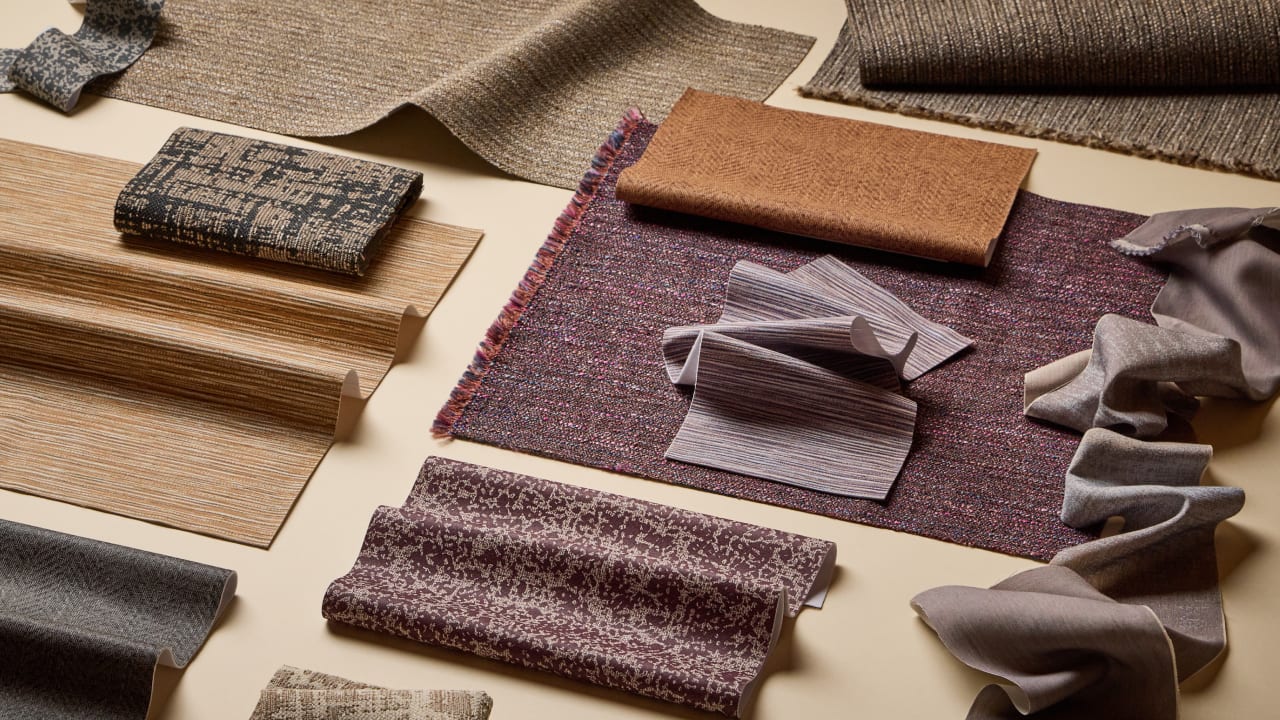
Our Wellness Suite Collection was designed with that balance in mind. Bio-Silica Hybrid Coated Textiles combine durability and cleanability with a soft hand and 76% bio-based polyurethane, while Crypton® Performance Wovens pair tactile comfort with high-performance durability. The Clear View Privacy Curtain and complementary Circon™ bio-sourced wallcoverings extend that restorative approach through privacy, color, pattern, and texture.
Our Wellness Suite Collection was designed with that balance in mind. Bio-Silica Hybrid Coated Textiles combine durability and cleanability with a soft hand and 76% bio-based polyurethane, while Crypton® Performance Wovens pair tactile comfort with high-performance durability. The Clear View Privacy Curtain and complementary Circon™ bio-sourced wallcoverings extend that restorative approach through privacy, color, pattern, and texture.
2. Shape the Arrival
In hospitality, the experience starts long before check-in. Healthcare can apply the same thinking to entrances, reception areas, waiting spaces, and wayfinding.
In a 2026 look at the future of healthcare design, IIDA highlights intuitive wayfinding, ease, and a cohesive journey as hospitality principles that healthcare can borrow to create a calmer experience from arrival to departure.
Thoughtful color, material, natural elements, and other visual and spatial cues can help people navigate with ease while setting the tone from the start.
The Design Solution:
The Design Solution:
P3TEC Advanced Wall Protection carries that design intent into high-traffic spaces, pairing superior impact and stain resistance with elevated aesthetics. Woven-, stone-, and textile-inspired patterns in a broad color range offer the versatility to reinforce a sense of place while protecting hardworking surfaces.
At UAB Medical West Hospital, that approach comes to life through hospitality-inspired interiors that draw on the surrounding Alabama landscape, using botanical themes, calming color, and organic forms to create a welcoming experience while supporting intuitive wayfinding.
P3TEC Advanced Wall Protection carries that design intent into high-traffic spaces, pairing superior impact and stain resistance with elevated aesthetics. Woven-, stone-, and textile-inspired patterns in a broad color range offer the versatility to reinforce a sense of place while protecting hardworking surfaces.
At UAB Medical West Hospital, that approach comes to life through hospitality-inspired interiors that draw on the surrounding Alabama landscape, using botanical themes, calming color, and organic forms to create a welcoming experience while supporting intuitive wayfinding.

3. Create a Sense of Sanctuary
In healthcare, a sense of refuge can take on greater meaning.
WGSN identifies “private sanctuaries” as an emerging healthcare design strategy, using softer boundaries, acoustic curtains, woven materials, and adaptable zoning to balance privacy with openness. Patient rooms can follow the same thinking by using softer material choices, comfortable furnishings, and greater personal control to minimize clinical cues and create space for rest and recovery. Color can play a role, too: WGSN points to soft pastels, grounding neutrals, and low-saturation hues as tools for creating calmer, more restorative wellness environments.

The Design Solution:
The Design Solution:
Across our privacy curtain collection, color, pattern, and texture help turn a highly functional element into part of the overall design experience. Clear View, part of Wellness Suite, adds a distinctive ombré effect in grounding neutrals and restorative hues. Beyond privacy, Muratto® Cork Acoustics extends that sense of refuge through natural warmth, tactile dimension, and acoustic comfort.
Across our privacy curtain collection, color, pattern, and texture help turn a highly functional element into part of the overall design experience. Clear View, part of Wellness Suite, adds a distinctive ombré effect in grounding neutrals and restorative hues. Beyond privacy, Muratto® Cork Acoustics extends that sense of refuge through natural warmth, tactile dimension, and acoustic comfort.
4. Design for the Senses
Sound, touch, color, light, and connections to nature all influence how we experience a space.
Healthcare is embracing that multisensory thinking. Tactile and biophilic materials can add warmth, while thoughtful acoustics can support communication, privacy and rest. WGSN also cites research in which viewing original artwork was associated with a 22% drop in cortisol levels, reinforcing the role sensory experience can play in wellbeing.
The Design Solution:
The Design Solution:
Autex Acoustics® combines acoustic performance with dimensional form, texture, and color across a broad range of wall and ceiling solutions. Crafted from 100% PET, with recycled content where applicable, and engineered to be carbon neutral, the collection brings environmental consideration into the sensory experience, too. Our broader Better by Nature portfolio extends that thinking through bio-based, renewable, and recycled material innovations.
Autex Acoustics® combines acoustic performance with dimensional form, texture, and color across a broad range of wall and ceiling solutions. Crafted from 100% PET, with recycled content where applicable, and engineered to be carbon neutral, the collection brings environmental consideration into the sensory experience, too. Our broader Better by Nature portfolio extends that thinking through bio-based, renewable, and recycled material innovations.

5. Let Performance Blend In
Perhaps the biggest takeaway from hospitality isn't a particular look. It's how seamlessly function can become part of the experience.
In healthcare, performance materials no longer need to announce themselves as such. From serene neutrals and tactile textures to rich color and expressive pattern, today's materials can meet demanding requirements across a wide range of design aesthetics. The opportunity is to make performance feel integrated rather than imposed.

The Design Solution:
The Design Solution:
Performance materials can deliver durability and cleanability without sacrificing a softer design language. PVC-free Silica coated textiles pair demanding performance with a soft hand, rich color, and eye-catching pattern, while Performance Woven Wallcoverings bring textile-like depth and texture to walls with contract-grade durability. Options such as Lexarn™ are PVC-free, bleach-cleanable, and engineered for high-traffic, health-sensitive environments.
Performance materials can deliver durability and cleanability without sacrificing a softer design language. PVC-free Silica coated textiles pair demanding performance with a soft hand, rich color, and eye-catching pattern, while Performance Woven Wallcoverings bring textile-like depth and texture to walls with contract-grade durability. Options such as Lexarn™ are PVC-free, bleach-cleanable, and engineered for high-traffic, health-sensitive environments.
Where Comfort & Care Meet
Healthcare is borrowing hospitality's warmth, comfort and attention to experience. Hospitality, meanwhile, is becoming more invested in wellness, restoration, and recovery. Different spaces call for different solutions, but both are moving toward environments that consider performance and experience together.
Whether someone is checking into a hotel, arriving for an appointment, or settling into a patient room, good design begins with the person at the center of it.
Explore our Healthcare Market for more solutions designed around comfort, performance, and the human experience.
Sources
—WGSN. Key Trend 2026/27: Therapeutic Healthcare Design
—WGSN. CMF Trend 2027/28: Healing Colours for Wellness Spaces